

Description
Product Overview
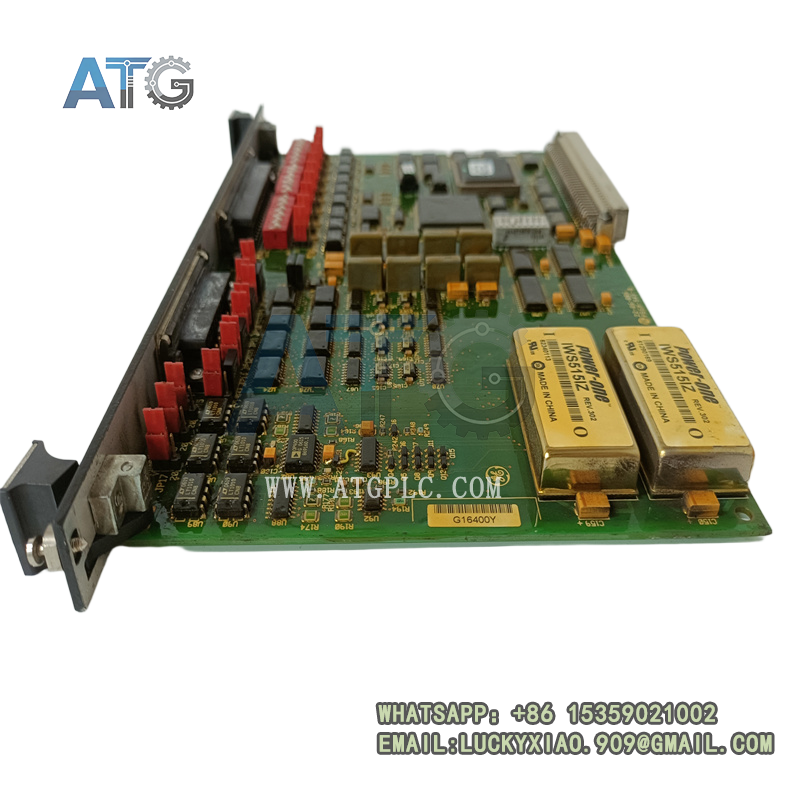
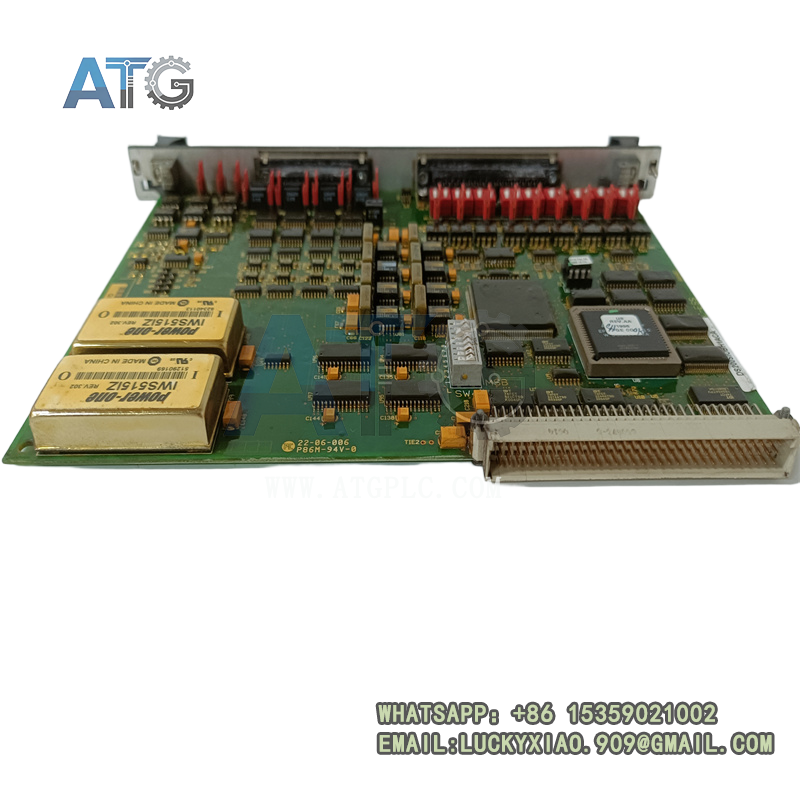
The GE DS200SIOBH1ACA is a serial input/output board from the DS200 line of the GE Speedtronic Mark V turbine control system. Engineers know it by its shorter designator, SIOB, and it occupies one slot in a Mark V VME rack.
The board works as a VME slave with no processor of its own. It buffers, isolates and converts signals, then hands everything to the main Mark V controller for the actual decision-making. That division of labour keeps the rack deterministic and makes the board a pure interface device rather than a second brain.
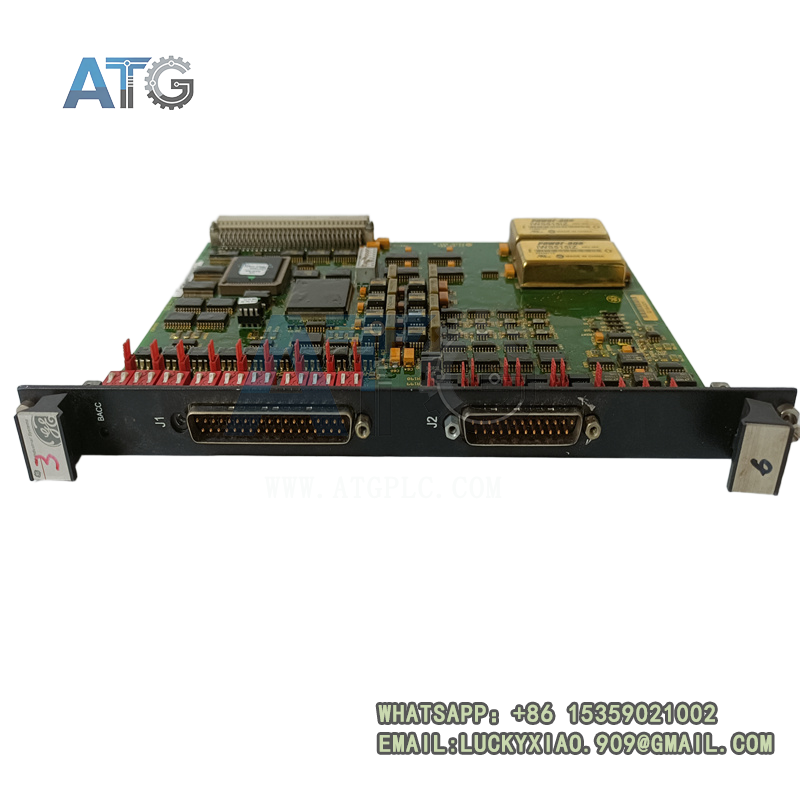
Front-panel cabling carries two 25-pin serial connectors on this revision, and the field side stays galvanically separated from the VME logic. Typical traffic includes operator interface terminals, Modbus RTU devices, drives and condition monitoring instruments that sit outside the control cabinet.
The ACA suffix marks a specific revision within the H1 group. Revision matters here more than on most boards, because port count and port type changed across the A-series.
Product Features
Here is what actually matters when you are commissioning or replacing one of these.
- Serial channels run 300 bps to 115.2 kbps, and the UART logic can lock onto an incoming rate automatically once auto-baud is enabled.
- Protocol support covers Modbus RTU, ASCII and GE proprietary serial formats, which lets one board serve both third-party meters and GE operator panels.
- Isolation barriers of roughly 1500 Vrms sit between the field ports, the discrete I/O and the VME backplane, so ground loops in a noisy turbine hall stay where they belong.
- ESD and surge protection circuits protect every field entry ahead of the logic stage, a detail that saves boards during maintenance season.
- Twenty jumpers and eighteen DIP switches set port mode, bus address, parity and termination. There is no software setup step hiding behind them.
- Discrete I/O points handle interlock relays and status contacts alongside the serial links, which reduces the number of cards in a crowded rack.
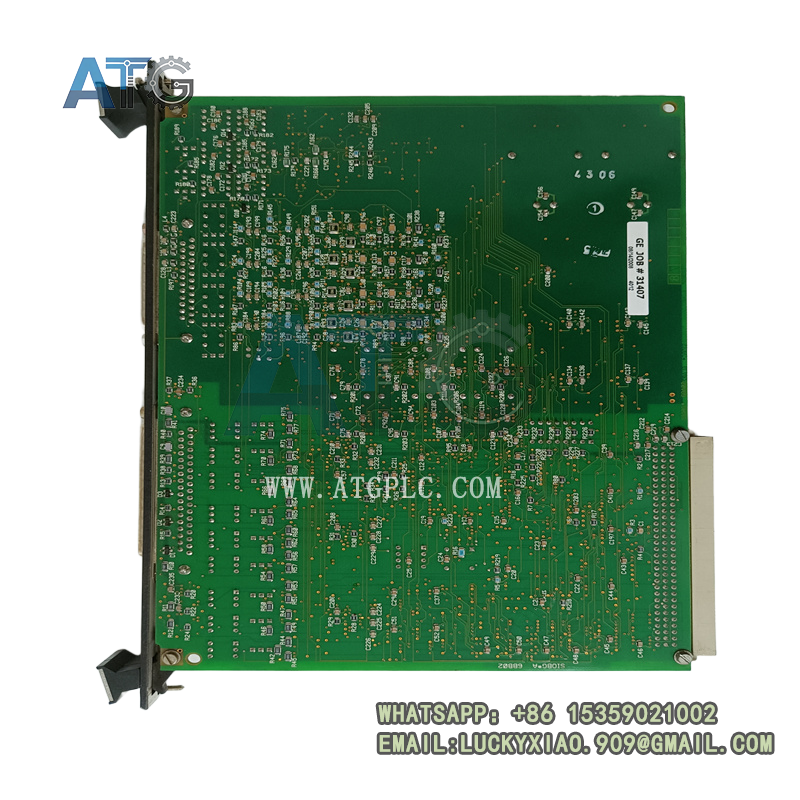
- Conformal coating covers the assembly for dust and moisture resistance, a real advantage on units that sit in coastal or humid plant rooms.
- A single front-panel LED reports power, data activity and fault state, enough for a quick walk-by check.
One field habit is worth adopting: photograph every jumper and switch on the old board before you pull it. Factory defaults almost never match a running plant, and a wrong bus address costs an afternoon.
The port layout differs by revision. The AAA board carries three RS-485 ports, while the ABA revision runs two mixed serial ports. An ACA unit follows the A-series pattern, so confirm connector count against your rack wiring before you order a spare.
Technical Specifications
| Item | Specification |
|---|---|
| Ordering model | DS200SIOBH1ACA |
| Series designator | SIOB, H1 group, ACA revision |
| Manufacturer | General Electric |
| Product type | Serial input/output (SIOB) interface board |
| System platform | GE Speedtronic Mark V turbine control |
| Bus role | VME slave, 6U board |
| Front-panel connectors | 2 × 25-pin D-sub serial |
| Serial standards | RS-232 / RS-485, jumper selectable |
| Baud rate | 300 bps to 115.2 kbps, auto-baud detection |
| Parity and stop bits | None / even / odd; 1 or 2 stop bits |
| Serial distance | RS-232 up to 15 m; RS-485 up to 1200 m |
| Protocols | Modbus RTU, ASCII, GE proprietary serial |
| Isolation | Approx. 1500 Vrms, field to VME backplane |
| Discrete I/O | 24 VDC channels, opto-isolated inputs, transistor outputs |
| Power source | +5 VDC from the VME backplane |
| Power draw | 2.5 A typical, 3 A maximum |
| Dimensions | 2.1 cm × 18.8 cm × 26.2 cm |
| Weight | 0.36 kg |
| Operating temperature | 0°C to +60°C |
| Protection rating | IP20 |
| Coating | Conformal coating applied |
| Configuration | 20 jumpers, 18 DIP switches |
Port count and discrete channel count vary between A-series revisions. Treat the serial and isolation figures as the stable core and verify I/O counts against the wiring diagram for your specific unit.
The detailed pictures are as follows:
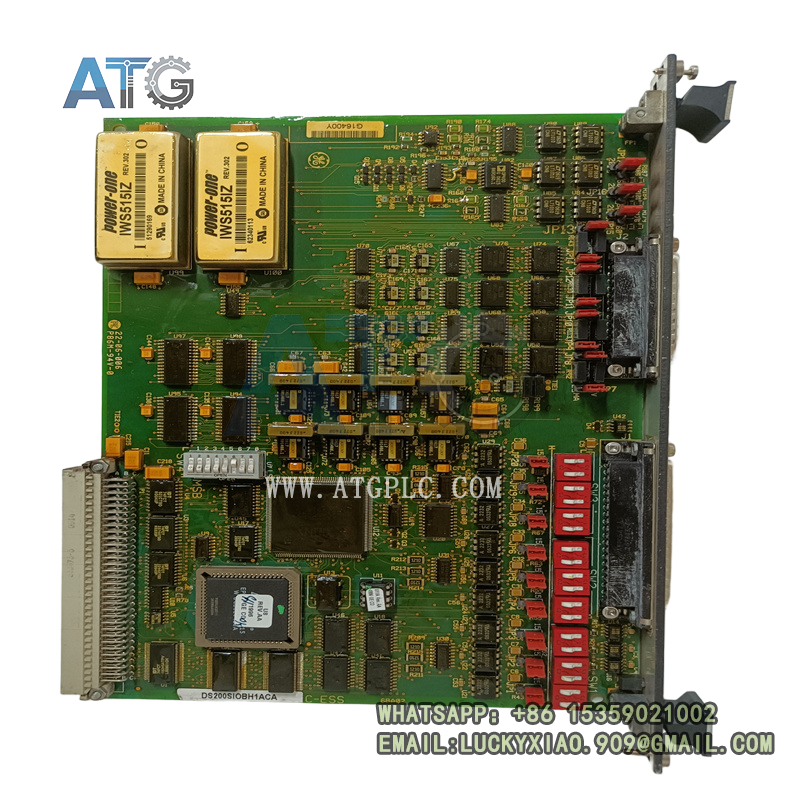
GE DS200SIOBH1ACA
Application Fields
These boards show up wherever a Mark V rack has to talk to equipment outside its own cabinet.
Combined-cycle and simple-cycle plants. Gas and steam turbine packages use SIOB cards for operator terminals, fuel gas analysers and vibration monitors on the same serial backbone. When a plant keeps its Mark V running past its original design life, this board is usually part of the reason it still works.
Refinery and compressor stations. Long RS-485 runs to remote skids are common here, and the 1200 m reach with proper termination suits that layout better than short-haul RS-232.
Balance-of-plant integration. Water treatment, auxiliary boilers and cooling systems often arrive with Modbus RTU only. A SIOB channel brings them into the turbine control narrative without a protocol gateway.
Retrofit and spare support. Plants holding legacy Mark V fleets buy these boards as spares because replacement controllers cost far more than a card swap.
Testing and commissioning rigs. Service shops use the board to reproduce plant serial behaviour on a bench before they travel to site.
Related Model Recommendations
- DS200SIOBH1ABA — earlier A-series revision with two mixed serial ports. It fits the same slot but will not match an ACA wiring plan, so check port count first.
- DS200SIOBH1AAA — three-port RS-485 variant from the same H1 group, useful when a rack needs more RS-485 drops than RS-232.
- DS215DMCBG1AZZ03A — Mark V processor and communication board. It is the natural partner when a rack needs both the controller side and the serial interface side refreshed.
- DS200TCRAG1ACC — relay output board from the DS200 line, paired with SIOB where interlock contacts must switch at higher current than the onboard drivers allow.