

Description
Product Overview
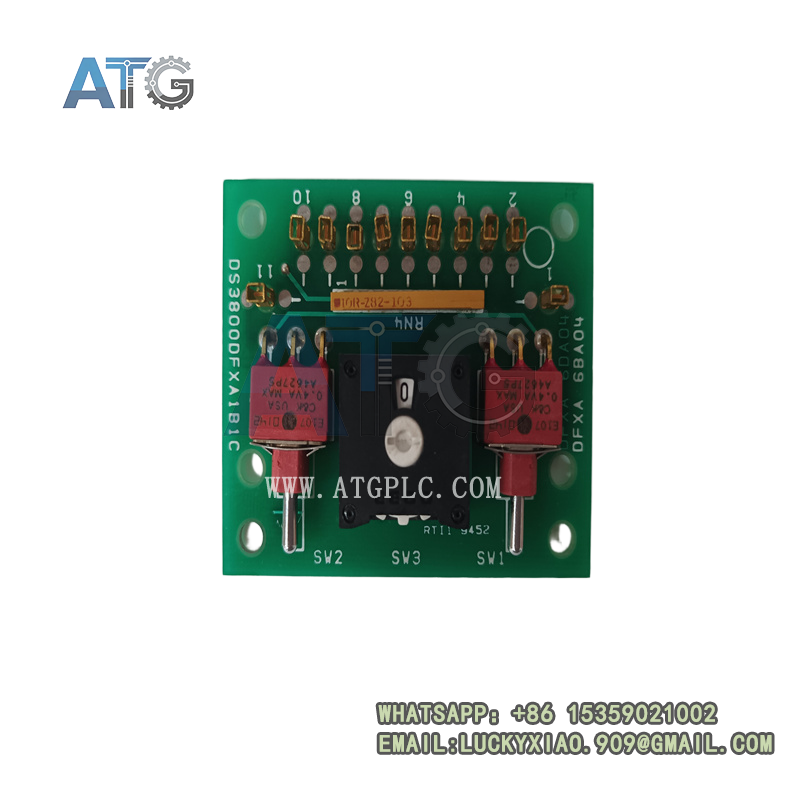
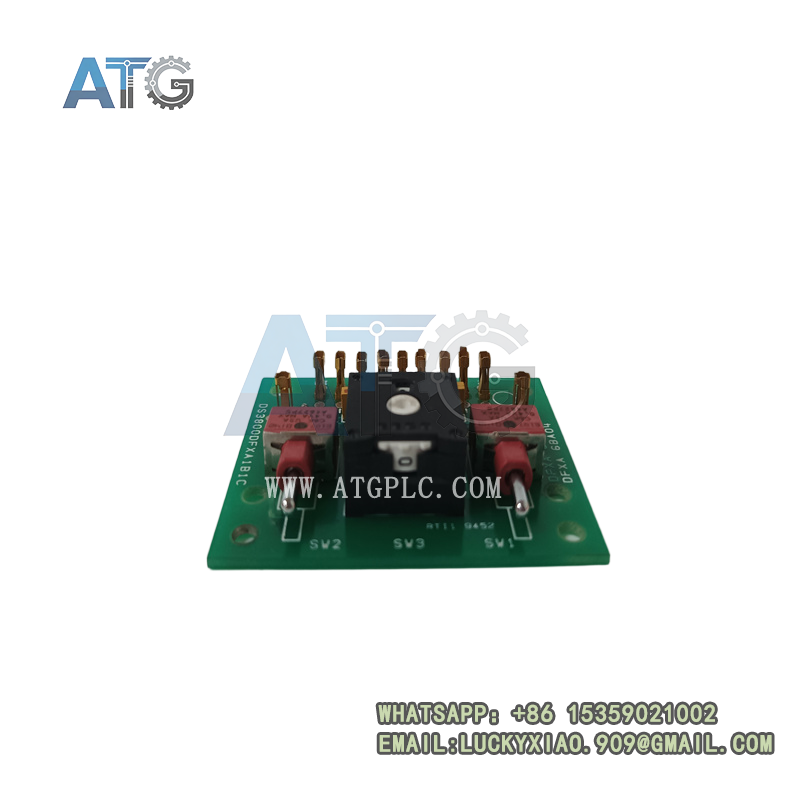
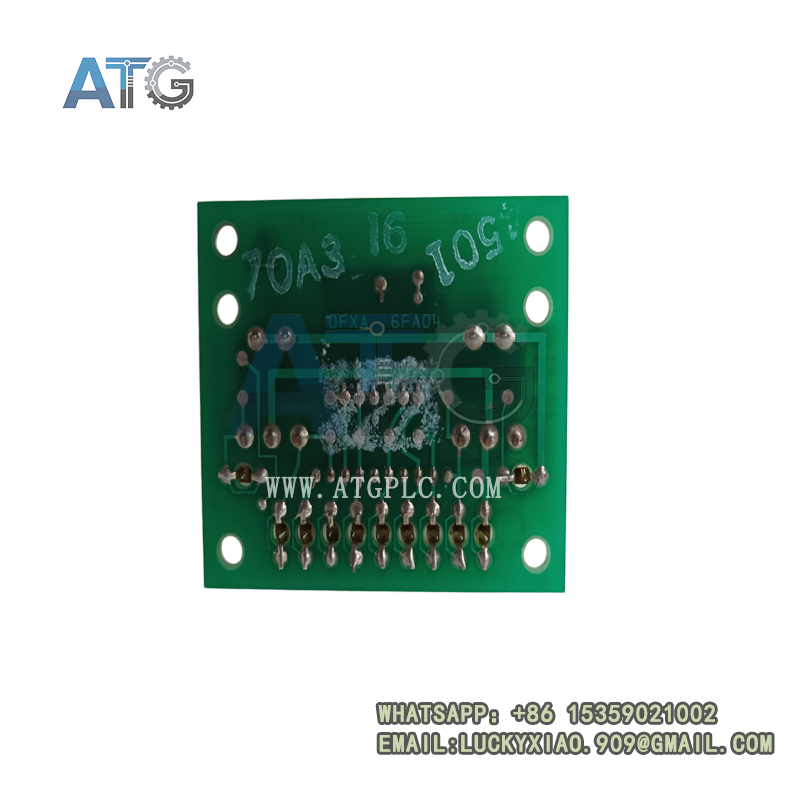
The GE DS3800DFXA1B1C is an excitation control and feedback board built for the GE Speedtronic Mark IV turbine control system. It sits in a Mark IV rack and acts as the regulation interface between the turbine governor and the generator field excitation system.
Its job is to take the voltage and current commands from the governing logic, compare them against actual field feedback, and adjust the excitation output to keep generator terminal voltage and reactive power stable. That closed-loop work runs continuously across every operating regime — startup, load pickup, load rejection and steady state.
The “A1B1C” tail identifies the specific revision within the DFX board family. Mark IV boards are decades old, so this one lives entirely in installed fleets. Plants that keep those turbines running stock these cards as critical spares, because a failed excitation board takes the generator offline fast.
Core Product Features
- Closed-loop field voltage regulation keeps generator output within spec across load changes, which is the whole reason the board exists.
- Field feedback conditioning samples actual excitation voltage and current, filtering and scaling them for the control loop to compare against the setpoint.
- On-board diagnostic LEDs show power, fault and status at a glance, so operators can see a problem before it reaches the HMI alarm screen.
- Field-isolated circuits separate low-level control signals from the higher-energy excitation side, protecting the rack from ground loops and surges.
- Plug-in card form factor matches the Mark IV backplane, so a swap does not require re-wiring the cabinet.
- Conformal coating on the PCB resists dust, humidity and corrosive air in turbine halls and coastal plants.
- Ribbon and edge-card connectors carry signals between this board and neighbouring Mark IV modules, which is the standard Mark IV backplane method.
- Industrial-grade component selection supports 24/7 operation over the long design life of a Mark IV turbine package.
Technical Specifications
| Item | Specification |
|---|---|
| Ordering model | DS3800DFXA1B1C |
| Product type | Excitation control and feedback board |
| Compatible platform | GE Speedtronic Mark IV turbine control |
| Core function | Field excitation regulation and feedback processing |
| Signal supply | 24 V DC nominal, backplane supplied |
| Feedback inputs | Excitation voltage and field current |
| Control output | Excitation regulation command to the field power stage |
| Backplane interface | Edge-card connector plus ribbon cables |
| Status indicators | Power, fault, communication LEDs |
| Board coating | Conformal, anti-dust and anti-moisture |
| Mounting | Mark IV rack plug-in slot |
| Operating temperature | 0°C to +60°C |
| Weight | Approx. 0.3 kg |
| Form factor | Standard Mark IV board format |
| Origin | United States |
| Certifications | CE, industrial EMC |
Distributor listings disagree on channel count and signal ranges, with some catalogues mislabelling this card as a discrete input board or an analog I/O board. Treat the excitation-regulation function and the Mark IV compatibility as the stable baseline, and confirm the exact terminal layout against the board silkscreen before wiring a spare into service.
Product Details and Application Fields
Product Details
Where it sits. The DFX board is not a field I/O module. It lives in the control rack and works between the governor processor and the excitation power stage. When a generator voltage wanders, the fault could be on this board, on the power stage, or in the feedback transducer — isolation testing has to go in that order.
Feedback chain. Actual excitation voltage and field current come back from the power stage, get filtered and scaled on this board, and feed into the regulation loop. A degraded feedback signal produces the same symptom as a bad regulation command: the generator voltage drifts. Comparing the commanded value against the measured one on a scope tells you which side is lying.
Revision tail. A1B1C is a specific revision within the DFX family. Earlier and later revisions share the same slot but may differ in component values and scaling. Photograph the original board’s jumpers and resistor straps before pulling it, because factory defaults rarely match a tuned site.
Diagnostics. The front LEDs give a first-level health check. A lit fault LED with no corresponding alarm in the HMI usually points to an internal board fault rather than a field problem.
Backplane integration. Signals move over edge-card and ribbon connectors. Loose ribbon cables are a classic Mark IV failure mode, so reseating those connectors is always the first troubleshooting step before condemning the board.
Age factor. Mark IV hardware has been out of production for years. Spares come from surplus, repaired or remanufactured stock, so acceptance testing on a known-good bench is worth the time before a critical spare goes on the shelf.
Application Fields
- Generator excitation regulation in gas and steam turbine Mark IV control packages
- Voltage regulation and reactive power control for utility and industrial generator sets
- Field current feedback and protection loops in thermal power plants
- Compressor and pump drive excitation systems in oil & gas and refining facilities
- Marine propulsion turbine control where Mark IV packages remain in service
- Legacy Mark IV fleet support and critical spare stocking for plants extending turbine life
Related Model Recommendations
- DS3800NHVK1A1A — companion Mark IV board for high-voltage drive and excitation-related control, from the same DS3800 product line.
- DS3800NDCS — Mark IV digital control and processing board that works alongside the DFX in the same rack architecture.
- DS3800HLNC — Mark IV analog and signal conditioning board, used when the plant needs to compare companion board options during a rack refurbishment.
- IS200EBH — Mark VIe-era excitation building block, relevant when a plant weighs a full Mark IV to Mark VIe migration instead of a like-for-like spare.