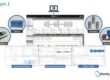
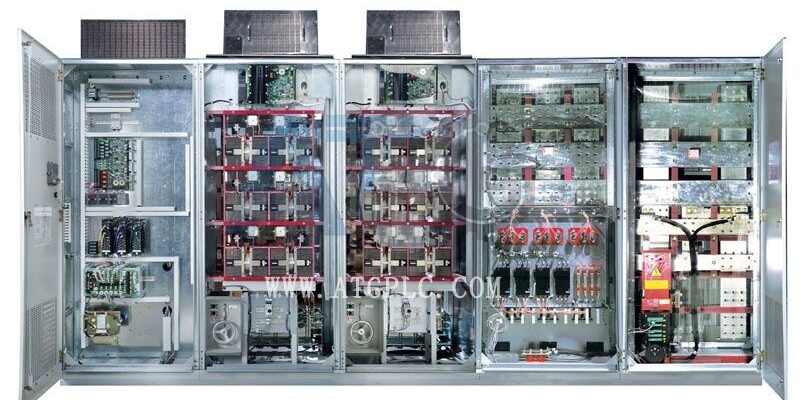
As a core component of modern power generation infrastructure, the excitation control system serves as the critical regulatory unit for synchronous generators, governing voltage output, reactive power regulation, and overall grid stability. GE Vernova, a global leader in power generation and grid control technologies, has decades of specialized experience in designing and manufacturing high-performance excitation control systems. Its flagship digital excitation solutions, represented by the EX2100e series integrated with the Mark* VIe control platform, have become industry benchmarks, delivering reliable, flexible, and intelligent control for gas, steam, nuclear, and hydro power generation units worldwide.
Product Overview & Technical Heritage
GE Vernova’s excitation control system is a fourth-generation fully digital generator control solution, built on over 40 years of field-proven excitation technology experience. With an installed base of more than 6,000 excitation systems operating across 70 countries, and over 1,200 deployed EX2100e units alone, the system has accumulated massive operational data and technical iteration experience, adapting to diverse power generation scenarios and complex grid operating conditions.
Centered on the EX2100e digital excitation control system, GE Vernova’s excitation product portfolio covers full-scale solutions for both new power plant installations and retrofitting of legacy excitation systems. Unlike traditional analog excitation devices, this software-enabled control system integrates advanced regulation algorithms, intelligent protection logic, and powerful diagnostic functions, forming a unified control ecosystem with GE Vernova’s Mark* VIe distributed control product line.
Core System Architecture
The GE Vernova excitation control system adopts a modular, high-integration hardware and software architecture, ensuring high reliability, expandability, and compatibility. The overall structure consists of three core layers: hardware control modules, embedded control software, and plant-level communication interfaces.
2.1 Hardware Configuration
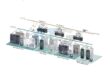
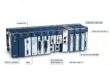
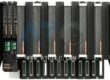
The system’s hardware core includes high-precision controller modules, power interface boards (PIBe), thyristor control modules, and fiber-optic communication units. All hardware components are industrial-grade, designed to withstand extreme temperature, electromagnetic interference, and long-term continuous operation in harsh power plant environments. The fiber-optic connection design effectively eliminates signal interference, improving the stability and anti-interference capability of real-time data transmission.
Supporting flexible hardware configurations, the system can be customized according to generator capacity and type, adapting to small and medium-sized distributed generators as well as large-scale ultra-supercritical steam turbines, nuclear power units, and large hydroelectric generators. Its modular design greatly simplifies on-site installation, maintenance, and component replacement, reducing equipment downtime.
2.2 Software & Algorithm Framework
Equipped with a self-developed high-efficiency control software suite, the system features industry-leading automatic voltage regulation (AVR) logic, multi-dimensional limit control algorithms, and power system stabilization modules. The embedded intelligent control simulator supports pre-operation simulation and parameter debugging, enabling engineers to verify control strategies offline and optimize system operating parameters without affecting on-site unit operation.
In addition, the system integrates dedicated protection and limiting functions, including over-excitation limit, under-excitation limit, over-voltage protection, and current limiting control. These functional modules work synergistically to maximize generator output performance while ensuring the safe and stable operation of generators and grid equipment.
2.3 Communication & Integration Interfaces
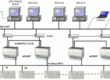
GE Vernova’s excitation control system supports mainstream industrial communication protocols, including Profibus DP, Modbus TCP/UDP/RTU, and hardwired signal interfaces, enabling seamless data interaction with plant distributed control systems (DCS), static starter systems, and turbine control systems. It also reserves remote monitoring access through the Visor platform, realizing real-time remote data acquisition, operating status monitoring, and fault early warning.
Core Functional Capabilities
3.1 High-Precision Voltage & Reactive Power Regulation
The primary function of the system is to maintain generator terminal voltage stability and reasonable reactive power distribution. With high-response digital regulation algorithms, it can quickly track grid voltage fluctuations and adjust generator excitation current in real time. The system achieves ultra-high voltage regulation accuracy, effectively suppressing voltage deviation caused by load changes, grid faults, and unit operating condition fluctuations, ensuring the generator operates within standard voltage ranges.
For grid-connected operation units, the system can precisely control reactive power output, optimize power factor, reduce grid line loss, and improve the overall power supply quality of the power system. It also supports reactive power regulation during peak and valley grid load periods, enhancing grid operation flexibility.
3.2 Comprehensive Safety Protection & Fault Tolerance
Integrating multiple built-in protection mechanisms, the system provides full-process safety monitoring for generator excitation operation. It can quickly identify and respond to abnormal operating conditions such as excitation over-current, under-excitation loss, voltage surge, and system oscillation. When a fault occurs, the system automatically triggers protection actions including limit adjustment, alarm prompt, and safe shutdown, avoiding equipment damage and grid disturbance accidents.
Adopting redundant control logic and fault-tolerant design, key control modules and communication links support redundant backup. Even if a single component fails, the system can maintain normal operation without tripping, greatly improving the overall operational reliability of the power generation unit.
3.3 Intelligent Diagnosis & Operation Optimization
The system is equipped with powerful built-in diagnostic functions, supporting real-time monitoring of hardware module status, software operation parameters, and signal transmission quality. It can automatically record operating data, fault logs, and parameter change records, providing comprehensive data support for equipment maintenance and fault troubleshooting.
Matching with the COMGUIDE HMI commissioning tool, the system realizes visualized operation, parameter configuration, and on-site debugging. Operators can intuitively view unit operating status, adjust control parameters, and complete daily maintenance work, reducing operation difficulty and human error risks. Meanwhile, the system’s adaptive optimization algorithm can continuously adjust control strategies according to long-term operating data, optimizing unit operating efficiency and reducing energy consumption.
Key Technical Advantages
4.1 Strong Scenario Adaptability
GE Vernova’s excitation control system is universally applicable to all mainstream power generation types, including fossil-fueled steam power, gas power, nuclear power, and hydropower units. It supports both new project construction and old system renovation and upgrading. For legacy unit retrofits, the system can be compatibly deployed while retaining the original power conversion equipment, avoiding high-cost overall replacement, shortening outage transformation cycles, and reducing upgrade risks.
4.2 High System Integration & Compatibility
As an integral part of the Mark* VIe control system ecosystem, the excitation control system achieves deep integration with turbine control, unit protection, and plant automation systems. The unified software and hardware platform standardizes plant control architecture, simplifies system management, and reduces the difficulty of spare parts reserve and technical maintenance. Compared with independent third-party excitation systems, its overall coordination and system stability are significantly improved.
4.3 Low Operation & Maintenance Cost
The modular and intelligent design greatly reduces daily operation and maintenance workload. The automatic diagnosis and remote monitoring functions realize predictive maintenance, avoiding blind regular maintenance and reducing unnecessary maintenance costs. The high-reliability industrial components extend equipment service life, reduce component failure rates and spare parts replacement frequency, and further lower the full life cycle cost of the system.
4.4 Excellent Grid Adaptability
Facing the current complex power grid environment with high penetration of new energy power generation, the system’s powerful power system damping control function can effectively suppress low-frequency oscillation and grid voltage fluctuation, improving the grid-connected stability of power generation units. It meets the strict grid operation specifications of various countries and regions, providing strong support for grid safe and stable operation and new energy consumption.
Typical Application Scenarios
5.1 Thermal & Gas Power Plants
For large-scale steam and gas turbine generator units, the system provides precise excitation regulation and stable grid-connected control, adapting to frequent load adjustment and peak shaving operation requirements of thermal power units. It effectively improves unit response speed and operation stability under variable load conditions.
5.2 Nuclear Power Plants
With ultra-high reliability and safety design, the system meets the strict safety operation standards of nuclear power units. Its redundant fault-tolerant architecture and comprehensive protection functions ensure long-term stable and uninterrupted operation of nuclear power generation systems, guaranteeing the safety and continuity of nuclear power production.
5.3 Hydropower Plants
Aiming at the characteristics of rapid load change and frequent start-stop of hydropower units, the system adopts fast-response excitation regulation logic, which can quickly adapt to water flow and load fluctuations, stabilize generator voltage and reactive power output, and improve the grid-connected operation performance of hydropower units.
5.4 Legacy Unit Retrofit Projects
For old power plant excitation systems with aging performance and insufficient control accuracy, GE Vernova’s excitation renovation solutions retain the original power conversion links, upgrade only the control core and software system, efficiently complete equipment performance upgrading, and realize the intelligent and digital transformation of old units with low cost and short cycle.
Conclusion
GE Vernova’s excitation control system, represented by the advanced EX2100e digital solution, integrates decades of power control technology accumulation and massive field operation experience. With its modular high-reliability architecture, high-precision intelligent control capability, strong scenario adaptability, and low full-life-cycle operation cost, it has become a core preferred solution for global power generation unit excitation control. Whether for new high-standard power generation projects or intelligent upgrading of traditional units, the system can effectively improve power generation efficiency, ensure unit safe and stable operation, and support the safe, efficient, and low-carbon development of modern power systems.