System Overview
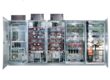
The GE PACSystems RX7i series is a high-performance, open-architecture Programmable Automation Controller (PAC) platform developed by GE Intelligent Platforms, targeting mid-to-large-scale, high-reliability industrial automation and process control applications. Built on the industry-standard VME64 bus architecture, the RX7i series abandons traditional closed PLC structures and adopts an embedded general-purpose processor-based design, balancing high-speed logic control, complex algorithm operation, multi-protocol communication, and system redundancy capabilities. It is widely deployed in critical industrial scenarios including power generation, petrochemical processing, manufacturing automation, water treatment, and large-scale mechanical equipment control, delivering stable, efficient, and scalable control solutions for mission-critical production systems.
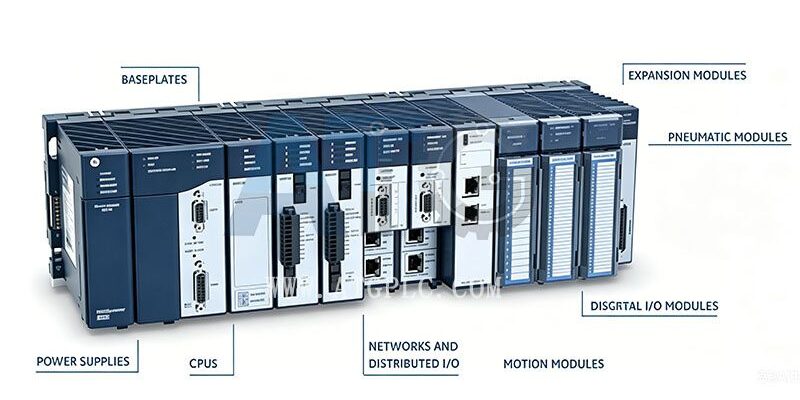
As the core high-end product line of GE PACSystems family, the RX7i series features excellent compatibility, expandability, and fault tolerance. It supports hot-standby CPU redundancy, hot-swappable I/O modules, and open industrial communication protocols, overcoming the performance limitations of traditional PLCs in large-scale data processing and complex process control. The entire system consists of core CPU modules, redundancy modules, communication modules, I/O modules, and supporting backplane racks, forming a complete modular industrial control system.
Working Principle of GE PACSystems RX7i Series System
2.1 Core Architecture Principle
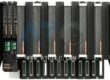
The RX7i system adopts a modular VME64 bus parallel processing architecture, with the CPU module as the core control unit. All functional modules (I/O modules, communication modules, redundancy modules) are mounted on the VME64 standard backplane, realizing high-speed data interaction and resource scheduling through the backplane bus. Different from dedicated industrial control chips used by ordinary PLCs, the RX7i CPU uses Intel general-purpose embedded processors (Celeron, Pentium M, dual-core Atom series), which supports multi-task real-time operating mechanisms and can simultaneously execute logic control, motion control, data acquisition, protocol conversion, and fault diagnosis tasks.
2.2 Operating & Control Principle
The system follows a cyclic real-time control mechanism. First, the CPU reads real-time data from local and remote I/O modules through the backplane and field buses, including sensor analog signals, switch status signals, and equipment operating parameters. Then, it executes pre-programmed control logic (ladder diagram, function block diagram, structured text, etc.) and complex industrial algorithms to generate corresponding control instructions. Finally, the control instructions are output to actuators through I/O modules to complete closed-loop control of industrial equipment and production processes.
Equipped with a dedicated real-time operating system, the RX7i system ensures deterministic control cycle execution, effectively avoiding control delay and data loss caused by multi-task competition. It supports user program storage in both battery-backed RAM and non-volatile flash memory, realizing power-off data retention and fast program recovery.
2.3 Redundancy & Fault Tolerance Principle
For high-reliability industrial scenarios, the RX7i system supportsHot Standby (HSB) CPU redundancy through Redundancy Memory Xchange (RMX) modules. The primary CPU and standby CPU run synchronously in real time, and the RMX module realizes real-time mirroring of operating data, program states, and I/O data between the two CPUs. When the primary CPU fails, the system completes bumpless switching to the standby CPU within microseconds, ensuring uninterrupted operation of the control system without affecting production processes. In addition, the system supports hot swapping of I/O and communication modules, allowing online replacement of faulty modules without system shutdown.
2.4 Communication Interaction Principle
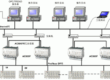
The RX7i system adopts open multi-protocol communication architecture. The embedded Ethernet port, serial ports, and extended communication modules support multiple industrial standard protocols. It realizes data interaction with upper computers, HMI, SCADA systems, and lower-level field devices. The system independently processes communication tasks through a dedicated communication processing unit, separating control logic operation and data transmission tasks to avoid communication congestion affecting control real-time performance.
Main Models and Detailed Functions of RX7i Series
The RX7i series is dominated by multi-generation CPU core modules, supplemented by supporting redundancy and communication modules. The mainstream core models cover low-power basic versions, medium-performance universal versions, high-speed enhanced versions, and high-end dual-core redundant versions, meeting the control requirements of different scale industrial scenarios. The detailed parameters and functions of each key model are as follows:
3.1 IC698CPE010 (Basic CPU Module)
The IC698CPE010 is the entry-level core CPU of the RX7i series, equipped with a 300 MHz Intel Celeron embedded processor, which is oriented to small and medium-sized industrial control applications with moderate computing demand. In terms of performance, it achieves a Boolean instruction execution speed of 0.33 ms per 1000 contacts, meeting the basic logic control and sequential control requirements of conventional industrial equipment. In terms of memory configuration, it is equipped with standard user RAM and flash memory, supporting conventional user program storage and real-time data caching.
In terms of functions, this module integrates basic industrial control capabilities, supports standard VME64 backplane I/O expansion, and is equipped with dual built-in serial ports to realize serial communication with field instruments and secondary equipment. It supports basic Ethernet communication protocols for program downloading, online debugging, and data transmission with upper monitoring systems. This model is mainly used for small-scale automation production lines, single-unit equipment control, and simple process control scenarios, with low power consumption and stable operation.
3.2 IC698CPE030 (Medium-Performance Universal CPU Module)
The IC698CPE030 is a mainstream medium-performance CPU of the RX7i series, powered by a 600 MHz Intel Pentium M processor, which comprehensively upgrades computing performance compared with the CPE010 model. It is configured with 64 MB user RAM and 64 MB non-volatile flash memory, which can store larger user programs and massive field operation data, and supports more complex logic control, analog quantity closed-loop control, and batch processing control algorithms.
In terms of expansion and communication, this module fully supports VME64 standard rack expansion, compatible with all RX7i series I/O and functional modules. It integrates high-speed Ethernet interface and enhanced serial communication ports, supporting multiple open protocols such as Modbus TCP/IP, Genius, and serial RTU. It supports basic system fault diagnosis and data recording functions, and can be matched with RMX redundancy modules to build hot-standby redundant systems. This model is widely applicable to medium-sized process control, packaging automation, and mechanical manufacturing automation scenarios, balancing performance and cost.
3.3 IC698CRE030 (Enhanced Redundant CPU Module)
The IC698CRE030 is an enhanced redundant version derived from the CPE030 hardware foundation, retaining the 600 MHz Pentium M processor and 64 MB dual memory configuration. Its core upgrade focuses on redundancy compatibility and system stability. The module optimizes the data mirroring interface and synchronous processing mechanism, which can efficiently cooperate with IC698CMX016 redundancy modules to realize high-precision real-time data synchronization between dual CPUs.
Functionally, it supports seamless hot-standby switching without program interruption and data loss during switching. It adds advanced system self-diagnosis functions, which can automatically detect CPU operation exceptions, communication faults, and I/O module failures, and upload fault information to the upper system in real time. It supports long-term stable operation in harsh industrial environments such as high temperature and electromagnetic interference, and is suitable for medium-sized key production links that require high continuous operation reliability.
3.4 IC698CRE040 (High-Speed High-Performance CPU Module)
The IC698CRE040 is a high-speed flagship universal CPU of the RX7i series, equipped with a 1.8 GHz high-frequency Pentium M processor, which has a qualitative leap in arithmetic and logic operation capabilities. It is configured with 64 MB battery-backed RAM and 64 MB high-speed flash memory, with faster program loading and data reading and writing speeds, and can support complex multi-loop PID control, motion control, and large-scale data collection and analysis tasks.
In terms of communication, the module is equipped with dual 10/100 Mbps adaptive Ethernet ports, realizing independent network segmentation for control communication and monitoring communication, avoiding network congestion and improving system security and stability. It supports richer industrial communication protocols and distributed I/O control, and can build large-scale distributed automation control systems. It has powerful fault logging and data tracing functions, which is convenient for equipment operation maintenance and fault analysis. This model is suitable for large-scale manufacturing lines, medium-sized petrochemical processes, and intelligent equipment control scenarios with high real-time performance requirements.
3.5 IC697CPX928-FE (High-End Dual-Core Redundant CPU Module)
The IC697CPX928-FE is the top high-performance redundant CPU of the RX7i series, adopting a 1.2 GHz dual-core Intel Atom processor, which realizes parallel processing of control tasks and communication tasks and greatly improves the system’s concurrent processing capability. The hardware is equipped with 1 GB user RAM and 512 MB large-capacity flash storage, which can support ultra-large-scale user programs, massive real-time data storage, and complex industrial algorithm operation.
This model is specially designed for ultra-high-reliability key industrial scenarios such as nuclear power auxiliary systems, oil refineries, and large chemical plants. It supports full-function hot-standby redundancy, with faster data synchronization speed and higher switching stability. It has industrial-grade anti-interference, anti-vibration, and high-temperature resistance capabilities, and supports 7×24 hours uninterrupted stable operation. In addition, it supports advanced system encryption and access control functions, improving the safety level of industrial control systems, and is the core control module for high-end critical process control applications.
3.6 IC698CMX016 (Redundancy Memory Xchange Module)
As a core supporting functional module of the RX7i series, the IC698CMX016 is dedicated to building CPU hot-standby redundant systems. Its core function is to realize real-time mirroring and synchronous updating of all operating data, program states, I/O data, and system parameters between the primary CPU and standby CPU. The module adopts high-speed dedicated data transmission channels, with extremely low synchronization delay, ensuring that the state of the standby CPU is completely consistent with the primary CPU in real time.
When the primary CPU fails, the CMX016 module instantly triggers the standby CPU to take over all control tasks, realizing bumpless switching without affecting the normal operation of the production process. It supports real-time monitoring of redundant link status, automatically diagnoses synchronization faults, and outputs alarm signals. It is compatible with all redundant CPU models of the RX7i series and is an essential core module for high-reliability redundant control systems.
Core System Characteristics and Technical Advantages
4.1 Open Standard Architecture
Based on the universal VME64 industrial bus standard, the RX7i series has good hardware compatibility and expandability, supporting third-party standard VME modules for system expansion. It adopts open programming standards and supports multiple programming languages compliant with IEC 61131-3, with strong program portability.
4.2 High-Reliability Redundancy Mechanism
The complete hot-standby CPU redundancy solution and hot-swappable module design effectively eliminate single-point faults of the system. The microsecond-level bumpless switching technology ensures zero downtime of key control systems, meeting the ultra-high reliability requirements of process industries.
4.3 Powerful Multi-Protocol Communication Capability
The system integrates Ethernet, serial ports, and Genius bus interfaces, supporting Modbus TCP/IP, Modbus RTU, Ethernet/IP, and other open protocols. It can seamlessly connect with various industrial HMI, SCADA, and field instruments, realizing integrated communication of the whole system.
4.4 High-Speed Real-Time Control Performance
Equipped with high-performance general-purpose processors and real-time operating system, the system realizes deterministic cyclic control, with fast logic execution speed and low control delay, which can meet the high-precision and high-real-time control requirements of complex industrial processes and motion control scenarios.
Typical Application Scenarios
The GE PACSystems RX7i series system is mainly applied to mid-to-high-end industrial control scenarios requiring high stability, high precision, and high reliability, including thermal power generation, nuclear power auxiliary control, petrochemical process control, pharmaceutical production automation, water supply and drainage treatment, large-scale packaging and logistics equipment, and intelligent manufacturing production lines. Its modular design and scalable performance can meet the differentiated control needs of small single equipment to large-scale distributed industrial systems.