
Description
Allen-Bradley 1784-U2CN Product Introduction
- Model: 1784-U2CN
- Brand: Allen-Bradley (Rockwell Automation)
- Series: Allen-Bradley 1784 ControlNet Series
- Core Function: ControlNet industrial communication
- Type: Communication Module
- Key Specs: 24VDC, 2 ports, ControlNet
- Supply Status: in stock
- Stock: 7
- Warranty: 1 year
- Ship From: China
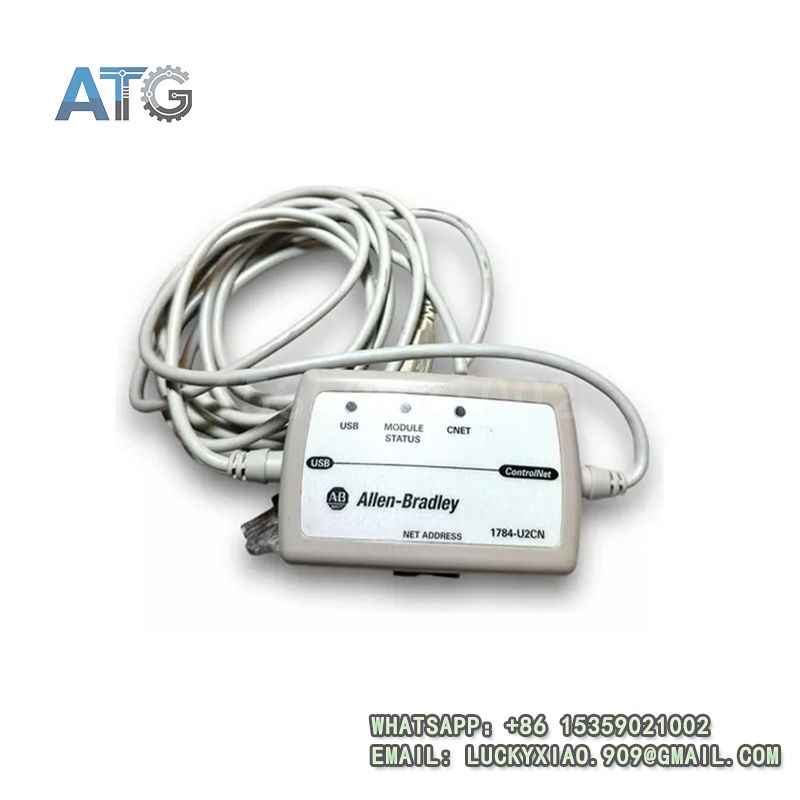
1784-U2CN
Product System Function Introduction
The 1784-U2CN is a communication module under Allen-Bradley’s 1784 ControlNet Series. It is designed for industrial ControlNet communication. It transmits data stably and efficiently. It is widely used in medium and large industrial automation systems. Its specific system functions are divided into the following points:
1. Functional Positioning and Core Value: It is a professional ControlNet communication module. It realizes data interaction between industrial control devices. It connects PLCs, HMIs and field equipment. It ensures stable operation of the entire control network.
2. Communication Performance: It has 2 ControlNet ports for multi-device connection. It supports ControlNet communication protocol. It has high data transmission reliability and low latency. It adapts to complex industrial on-site environments.
3. Compatibility and Integration: It is fully compatible with Allen-Bradley control systems. It integrates seamlessly with ControlLogix and CompactLogix series. It supports connection with various industrial devices. It is easy to install and configure.
4. Reliability and Durability: It adopts rugged industrial design. It has strong anti-electromagnetic interference ability. It resists high temperature, humidity and dust. It has long service life and low failure rate.
Application Industries
With its stable communication performance, good compatibility and high reliability, this communication module is widely used in various industrial fields, especially Allen-Bradley’s advantageous fields such as automotive and petrochemical. The main application industries are as follows:
1. Automotive Manufacturing Industry: It is used in automobile assembly lines and parts processing workshops. It connects control devices and robots. It ensures smooth data transmission in the production line.
2. Petrochemical Industry: It is applied to chemical production workshops and pipeline monitoring systems. It adapts to harsh on-site environments. It ensures stable transmission of monitoring and control data.
3. Electronic Manufacturing Industry: It is used in electronic component assembly and testing equipment. It builds a stable industrial communication network. It improves production efficiency and data accuracy.
4. Water Treatment Industry: It is applied to water supply and sewage treatment systems. It connects monitoring instruments and control equipment. It ensures timely transmission of operation data.
5. General Automation Industry: It is suitable for medium and large automated production systems. It is widely used in material handling, precision machining and other scenarios.
Usage Instructions
To ensure the stable and safe operation of the 1784-U2CN communication module, please follow the following usage instructions:
1. Installation Requirements: Install the module firmly in a dry and well-ventilated control cabinet. Keep it away from high temperature, humidity and corrosive gases. Ensure good ventilation to avoid overheating.
2. Wiring Specifications: Strictly follow the wiring diagram to connect power and communication cables. Distinguish positive and negative poles clearly. Use shielded cables to reduce interference. Do not wire with power on.
3. Parameter Configuration: Configure communication parameters with Allen-Bradley Studio 5000 software. Set network address and protocol parameters as needed. Ensure parameters match the industrial network requirements.
4. Operation and Maintenance: Regularly check the module’s running status and indicator lights. Clean the module surface to remove dust. Check cables for looseness and tighten them in time. Regularly check communication stability.
5. Safety Precautions: Cut off the power before installation or maintenance. Do not touch the module’s terminals with wet hands. Avoid collision or impact on the module. Only professional personnel can perform debugging.