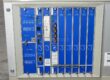
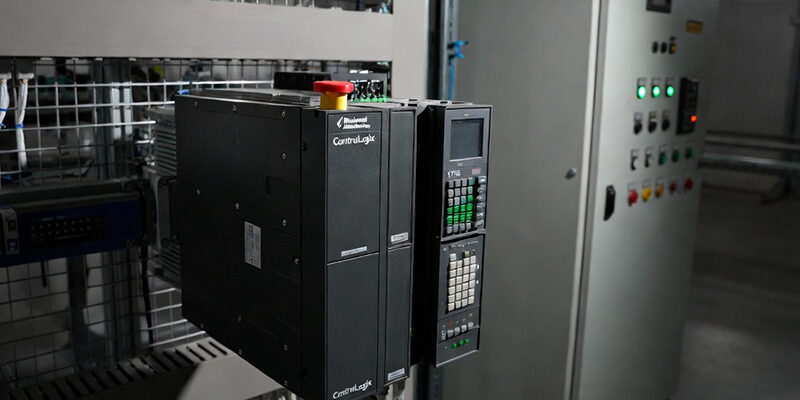
Walk into any high-speed packaging plant, automotive assembly line, or major pharmaceutical facility in North America, and you will find the same sight: a 1756 chassis quietly blinking in the cabinet.
Since its launch in the late 90s, the ControlLogix (CLX) platform has outlived almost every competitor that tried to kill it. While Siemens dominates Europe with the S7, Rockwell’s 1756 series remains the undisputed heavyweight champion of the North American industrial market.
As someone who has integrated, repaired, and sourced these systems for twenty years, I can tell you that this dominance isn’t just about brand loyalty. It’s about an architecture that was accidentally “future-proof” before that term even existed.
Here is a deep dive into why the ControlLogix 1756 series is still the standard, and how to manage the lifecycle of your hardware.
1. The “Passive Backplane” Genius
The smartest thing Rockwell engineers ever did was make the 1756 chassis “dumb.”
In many competing systems, the backplane (the rack itself) has active chips that dictate speed and compatibility. If you want a faster CPU, you often have to rip out the entire rack.
- The 1756 Advantage: The ControlLogix backplane is essentially a high-speed, passive copper highway. It uses a Producer/Consumer model, meaning data is broadcast rather than polled.
- Real World Impact: You can take a 1999-era chassis, pull out a 1756-L1 processor, and slot in a brand new 1756-L85E quad-core processor. It just works. You don’t have to re-wire the I/O. You don’t have to drill new holes in the backplate. This backward compatibility is why plant managers refuse to switch brands.
2. The Processor Wars: L6 vs. L7 vs. L8
If you are buying spares, you need to know the generational differences. They are not just speed upgrades; they are architectural shifts.
- 1756-L6x (The Legacy Workhorse):
- Identifier: Uses a physical battery (1756-BA2) on the front.
- The Risk: If that battery dies while the power is off, you lose the program. I have seen million-dollar lines down because a $15 battery was ignored for 5 years.
- Status: Obsolete. If you still run these, you need a migration plan.
- 1756-L7x (The Capacitor Era):
- Identifier: No battery. Uses an internal “Energy Storage Module” (super-capacitor) to write the program to an SD card on power loss.
- The Shift: This killed the “dead battery” downtime risk.
- Current Status: Active Mature. Still widely available, but prices are creeping up.
- 1756-L8x (The Quad-Core Beast):
- Identifier: Built-in Gigabit Ethernet port on the faceplate.
- Performance: It is reportedly 10-20x faster than an L7. The communications are handled by a dedicated core, meaning heavy SCADA traffic doesn’t bog down your ladder logic execution.
- Why Upgrade: If your scan time is lagging or your HMI is sluggish, swapping an L7 for an L8 is often cheaper than rewriting inefficient code.
3. The “Firmware” Trap (v20 vs. v21)
This is the most common headache I solve for clients. Rockwell introduced a major security change between Firmware v20 and v21.
- The Issue: Firmware v21 introduced digital signing.
- The Consequence: You cannot just “flash up” an old L6 processor to v30. The hardware limits the firmware ceiling.
- L6 Limit: v20.
- L7 Limit: Currently v36+.
- Buying Tip: If you buy a “Refurbished” L7 processor, ask what firmware is on it. If it arrives with v32 and your plant standard is v24, you will waste hours flashing it down (if you even have the right ControlFlash files downloaded). Always specify your target firmware on the Purchase Order.
4. Communication: The Death of ControlNet
Ten years ago, the 1756-CNB (ControlNet Bridge) was the spine of every system. Today, it is a legacy burden. Coaxial cables are noise-sensitive and hard to terminate.
- The Modern Standard: The 1756-EN2T (EtherNet/IP) is the new king.
- The Upgrade Path: If you are still running Remote I/O over ControlNet (“Blue Hose” or Coax), you don’t have to rip it all out at once. The 1756 chassis allows you to run a CNB card right next to an EN2T card. You can migrate one rack at a time to Ethernet.
5. Critical Spares Checklist
If you manage a ControlLogix site, these items should be in your cage, not just in a catalog:
- 1756-EN2T: The gateway to the outside world. Lightning strikes usually kill the Ethernet port first.
- 1756-PA72 / PB72: The power supplies. Like all electronics, the capacitors dry out after 15 years. If your rack power supply is original from 2005, replace it during the next shutdown.
- 1756-RM2: If you run Redundancy, this fiber-optic sync module is the single point of failure that manages the switchover.
Summary
The Allen-Bradley 1756 ControlLogix remains the standard because it respects the user’s investment. It allows you to mix a 2024 processor with a 2004 I/O card.
However, “robust” does not mean “immortal.”
- Audit your L6 processors and replace them before the batteries fail.
- Stock EN2T cards for network storms.
- Watch your firmware versions when buying surplus.
The 1756 platform isn’t going anywhere, but your strategy for maintaining it needs to evolve.