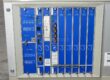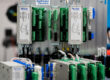

If your plant relies on HIMA H41q or H51q systems (collectively known as the HiQuad family), you are operating one of the most robust safety platforms ever built. These SIL3 systems are tanks. They don’t fail often, but when they do, they fail hard.
Because HIMA has moved focus to the HIMax and HIMatrix platforms, sourcing “fresh” spares for the classic HiQuad series is becoming a tactical challenge. You are likely relying on the secondary market, where a “tested” card often just means the LEDs turned on.
Here is a technical breakdown of the critical inventory you need to secure to keep your Emergency Shutdown (ESD) or Fire & Gas (F&G) system alive.
1. The CPU Architecture: F8650 vs. F8652
First, identify your processor. The H41q and H51q look similar, but their brains are different.
- H51q (Modular Rack System): Uses the F8650 series CPUs.
- H41q (Compact System): Uses the F8652 series CPUs.
The “X” vs. “E” Variant Trap
This is the most common purchasing mistake.
- F8650E / F8652E: The classic “Enhanced” version. Reliable, standard.
- F8650X / F8652X: The newer version with enhanced communication capabilities (often Ethernet-ready).
- The Risk: You cannot mix and match these blindly in a redundant (2oo4 or 1oo2) configuration. If you have a redundant pair of CPUs, they must match in hardware revision and firmware OS. If you replace a failed
F8650Ewith a surplusF8650X, the system will likely refuse to synchronize, leaving you running on a single leg (simplex) with no backup.
2. Communication: The Weakest Link (F8627)
The I/O cards in a HIMA system rarely die. The communication modules, however, work the hardest.
- F8627 (Ethernet Module): This is the gateway to your DCS or SCADA via OPC or SafeEthernet. These run hot. Heat kills the internal components over 15+ years.
- F8621A (Coprocessor): Used for Modbus serial communication.
- Inventory Advice: If you lose your F8627, you lose visibility. Your plant might keep running (logic is in the CPU), but your operators will be blind. Stock at least one F8627X and ensure it is pre-configured with the correct IP address and “resource” settings from ELOP II.
3. Power Supply & Battery Buffering
HIMA systems are unique because they treat power monitoring as a safety-critical function.
- F7126 (5VDC Power Supply): This module takes your 24VDC plant power and steps it down to 5VDC for the rack backplane. It is a high-load switching power supply.
- Failure Mode: Capacitor dry-out. If you have 3 of these sharing the load and one fails, the others might trip on overload if they are also old. Replace them in sets.
- F7131 (Power Monitoring & Battery): This module holds the buffer batteries that keep the RAM alive during a power outage.
- Critical Maintenance: When was the last time you changed the batteries in the F7131? If the plant loses power and these batteries are dead, your application program is gone. You will need to reload the code from the engineering station. If you don’t have a current backup, you are in serious trouble.
4. Critical I/O Modules
While digital inputs are tough, the output modules take the abuse of field switching.
- F3330 / F3331 (Digital Output): These switch the 24VDC to your solenoids.
- F3236 (Digital Input): The standard 16-channel input card.
- F6217 (Analog Input): Used for pressure/temperature transmitters.
- Safety Relays: Many HIMA safety outputs drive external coupling relays. Check your F3430 relay modules. If a relay contact welds shut, you lose your safety function.
5. The Software Gap: ELOP II
You cannot talk about hardware without mentioning the software: ELOP II.
- Version Compatibility: A modern Windows 10/11 laptop running the latest ELOP II (e.g., v5.x) may have trouble communicating with a 20-year-old F8650 CPU running ancient firmware (OS).
- The Fix: You may need to “flash” the OS of a surplus CPU to match your project file version. Always demand the OS Version from the vendor before you buy. (e.g., “Need F8650 hardware requiring OS V7.0”).
Summary Checklist
Don’t wait for a “System Fail” alarm.
- Check F7131 Batteries: Replace them annually.
- Match CPU Revisions: Don’t mix E and X models.
- Stock an F8627: It is your only window into the system.
- Verify ELOP II Backups: Ensure you have the source code and the password to download it.
HIMA systems are built to last forever, but the laws of physics still apply to their capacitors and batteries. Treat them with respect, and they will keep your plant safe for another decade.